


21 januari 2017: lees ook dit artikel:
4 april 2016: lees ook dit artikel:
en dit artikel:
Op de website van het Instituut voor hyperbare zuurstof behandelingen staat uitstekende informatie over hyperbare zuurstof behandelingen:
4 april 2016: Bron: Cochrane library
Naar de effecten van hyperbare zuurstoftherapie is niet zo heel veel onderzoek gedaan. Waarschijnlijk omdat dit een hele dure behandeling is en er niet zoveel centra zijn waar deze behandeling wordt aangeboden. Toch is er in 2012 door de Cochrane Library een review studie gedaan naar de effecten van hyperbare zuurstof. Zij vonden 11 gerandomiseerde studies met totaal 669 patiënten en hun conclusie is wel dat hyperbare zuurstof een meerwaarde kan betekenen voor patienten die eerder betraald zijn en daar veel last van hadden.
Conclusie luidt dat hyperbare zuurstof de kans op ernstige bijwerkingen op langere termijn door bestraling bij mond- en keelkanker en bij rectumkanker vermindert. Ook vermindert hyperbare zuurstof de kans op botnecrose (botontstekingen) bij het trekken van tanden en kiezen in voormalig bestraald gebied. (ik heb dit ook zelf ondergaan voordat bij mij vier kiezen werden verwijderd door de kaakchirurg)
These small trials suggest that for people with LRTI affecting tissues of the head, neck, anus and rectum, HBOT is associated with improved outcome. HBOT also appears to reduce the chance of ORN following tooth extraction in an irradiated field. There was no such evidence of any important clinical effect on neurological tissues. The application of HBOT to selected patients and tissues may be justified. Further research is required to establish the optimum patient selection and timing of any therapy. An economic evaluation should be undertaken
Hier het abstract van die studie, voor het volledige studierapport moet u betalen:
Hyperbaric oxygen therapy for late radiation tissue injury.
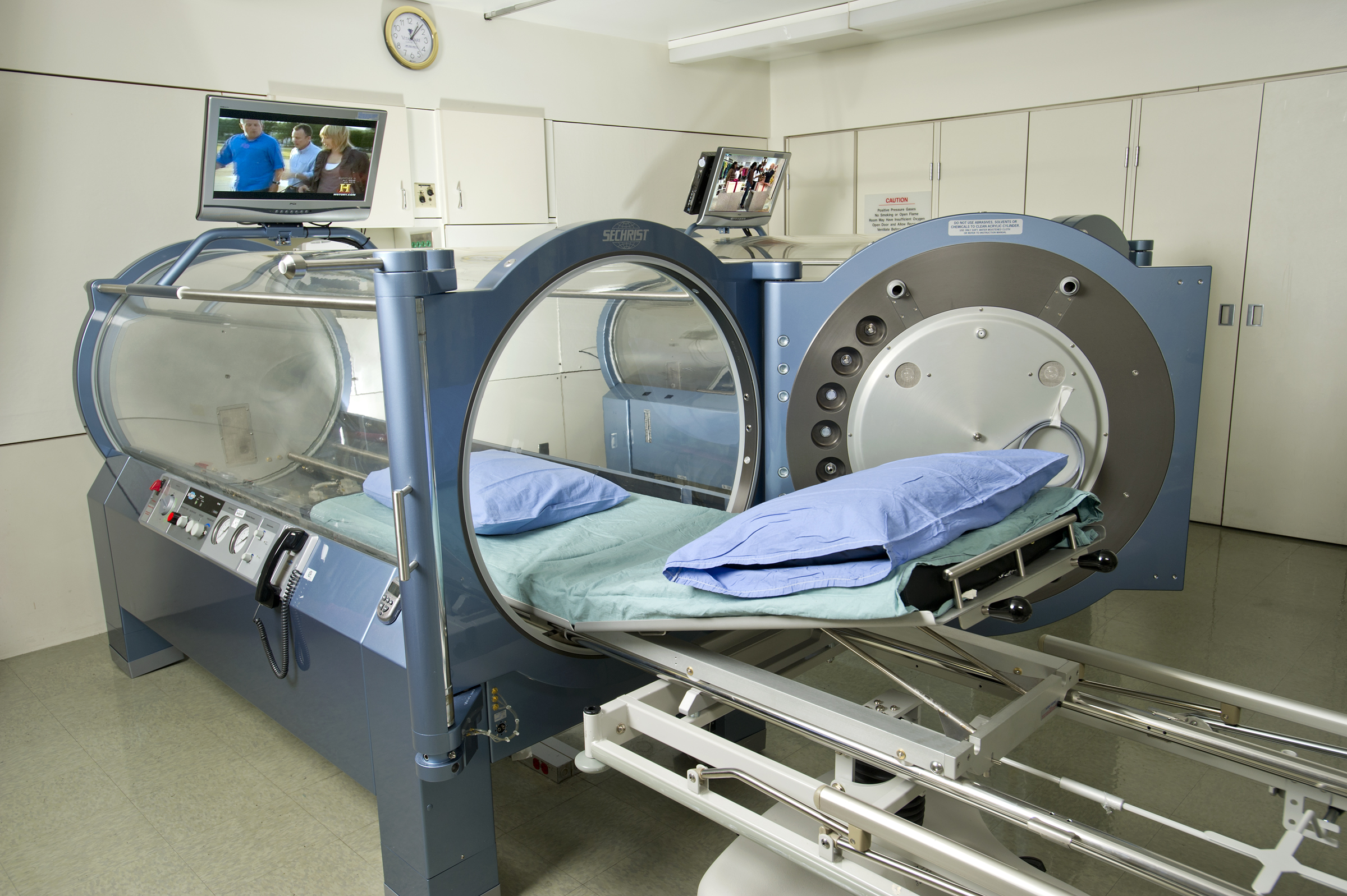
Foto van een individuele hyperbare zuurstofkamer die in Amerika veel wordt gebruikt maar deze is in Nederland verboden. In Nederland ga je met meerderen tegelijk in een soort van duikboot, zie hieronder.
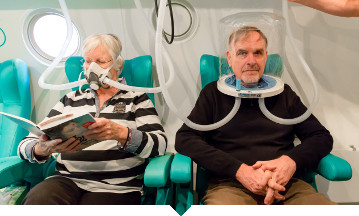
Zie de website van het Instituut voor hyperbare zuurstof behandelingen
9 oktober 2009: Bron: Tijdschrift Radiation Oncology
Hyperbare zuurstoftherapie na bestraling geeft significant betere kwaliteit van leven bij patienten die bestraald zijn voor kanker in mond- en neusgebied. Dit concluderen Nederlandse onderzoekers uit een kleinschalige maar wel gerandomiseerde studie bij 19 patienten met tong- en neuskanker. Op alle onderzoekspunten voor kwaliteit van leven, zoals beter slikken, minder droge mond door verminderde speeksel aanmaak en ook pijn in de mond, scoorden de patienten die de hyperbare zuurstoftherapie kregen significant beter dan de patienten die geen hyperbare zuurstoftherapie kregen.
Gerelateerde artikelen
- hyperbare zuurstoftherapie verlicht bijwerkingen zoals pijn, fibrose, lymfoedeem, necrose en huidproblemen, arm- en schoudermobiliteit bij patiënten die worden of zijn bestraald voor borstkanker.
- hyperbare zuurstof geeft geen significante verbetering van bloedingen in buik en bekken bij operatie in bestraald gebied
- Hyperbare zuurstoftherapie verbetert in de meeste gevallen - bij meer dan de helft volledig - chronische weefselbeschadiging veroorzaakt door bestraling
- Hyperbare zuurstoftherapie na bestraling geeft significant betere kwaliteit van leven bij patienten die bestraald zijn voor kanker in mond- en neusgebied.
- Hyperbare zuurstof geeft uitstekende resultaten op het herstel van beschadigingen door bestralingen en geeft ook veel pijnverlichting. 76.7 tot 92.6 procent betere kwaliteit van leven
Plaats een reactie ...
Reageer op "Hyperbare zuurstoftherapie na bestraling geeft significant betere kwaliteit van leven bij patienten die bestraald zijn voor kanker in mond- en neusgebied."